As an Amazon Associate this site earns from qualifying purchases.
Types of Robot Lawn Mowers Explained
Before the mistakes, you need the vocabulary. There are now four meaningfully different categories of robot mower on the market, and confusing them is mistake number one.
| Type | How It Navigates | Typical Lawn Size | Setup Time | Price Range |
|---|---|---|---|---|
| Boundary Wire | Buried/pegged perimeter wire | Up to 1.25 acres | 4-8 hours | Check price on Amazon |
| GPS RTK (Wire-Free) | Satellite + base station | Up to 1.5 acres | 1-2 hours | Check price on Amazon |
| Vision / LiDAR | Cameras + onboard AI maps | Up to 0.75 acres | 30-90 min | Check price on Amazon |
| Hybrid (RTK + Vision) | Both, with fallback | Up to 2.5 acres | 1-2 hours | Check price on Amazon |
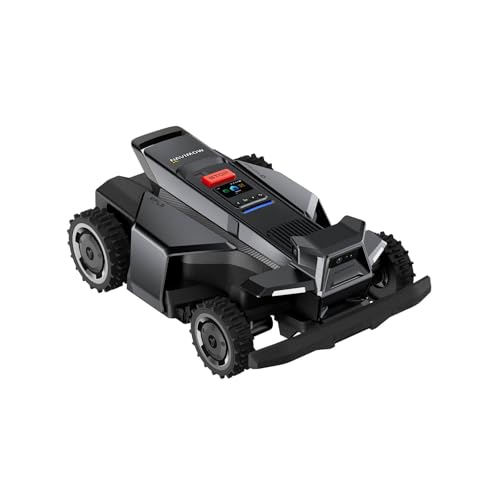
- Most Advanced All-Wheel Drive: This robot lawnmower features an ORV-tuned dual suspension system that powers through uneven terrain, climbs extreme 84% (40°) slopes, and crosses
- Turf-Safe Zero-Turn Steering: Unlike conventional systems, this lawn mower robot uses Xero-Turn AWD with eccentric front-wheel steering and smart traction control to prevent turf
![[All-Terrain Wire-Free] DREAME A3 AWD 2000 Robot Lawn Mower, 360° 3D LiDAR & AI Dual Vision Smart Robotic Mowers for 0.5 Acre, 80% Slopes & 45min Fast Charge, 1.97" Edge Trimming, 4G GPS Anti-Theft](https://mowveo.com/aimg/images/I/41JniIYuwJL._SL500_.jpg)
- ALL-WHEEL DRIVE FOR 80% SLOPES: You work hard all week, you shouldn’t have to work hard on your lawn. Reclaim your Saturdays from the back-breaking labor of push mowing. Powered
- NO WIRE. NO HASSLE. JUST MOW: Don't waste your weekend burying wire or fighting with an RTK station that won't stay connected. DREAME A3 AWD ai robot mower maps your yard in
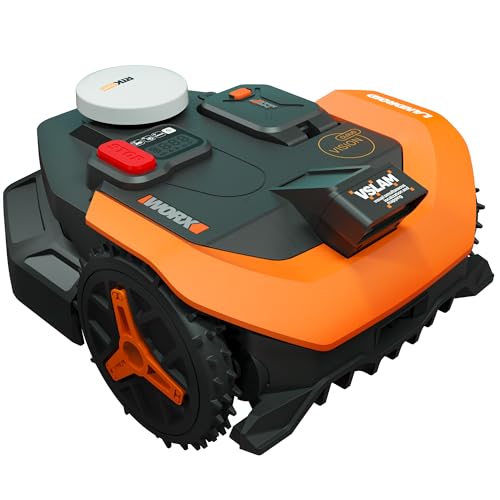
- Centimeter-level RTK Cloud Accuracy: Vision Cloud robot lawn mower uses commercial-grade RTK technology delivered straight from the cloud - no local antenna installation required
- Auto Mapping that Covers More: Vision AI enables this robot mower to understand any lawn shape and boundary types, automatically mapping your yard with smooth paths, closer
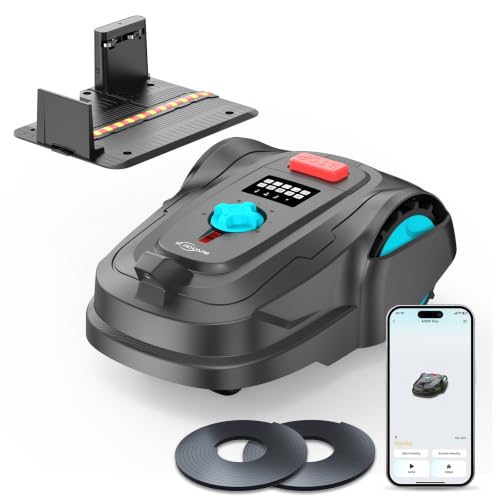
- Cordless Vision Navigation: The M800Plus robot lawn mower features a GPS & 3D vision system that identifies grass and non-grass areas, enabling cordless operation without
- NO-GO Zone Function: Create restricted areas within your yard using the included 32 ft magnetic strip. The strip helps define areas the mower should avoid, without the need for
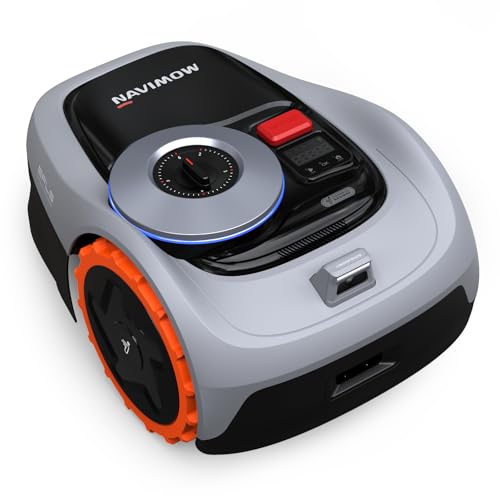
- RTK+Vision, Fit into Every Garden: Lawn covered by trees? Narrow corridor? However complicated your garden layout is, enhanced EFLS 2.0 got you covered. Customized RTK technology
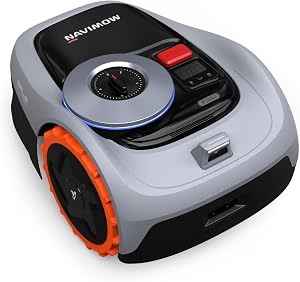
- No Perimeter Wires & Automatic AI-assisted Mapping: Quick, wire-free setup in just a few taps, simply use your smartphone to guide Navimow and map out virtual boundaries around
Top Picks
![[All-Terrain Wire-Free] DREAME A3 AWD 2000 Robot Lawn Mower, 360° 3D LiDAR & AI Dual V](/aimg/images/I/71sNNtN6NyL._AC_SL300_.jpg)
Reviewed by the Mowveo Editorial Team
Finding the right mistakes to avoid buying robot lawn mower comes down to matching the features to how you will actually use it.
Last Updated: June 2026
Written by the Mowveo Editorial Team
Look, I have run more robot mowers across more lawns than I care to admit, and the single most common email we get is some version of: "I spent $1,800 on a robot mower and it sits in the garage now." Almost every time, the failure traces back to a buying decision made before the box ever arrived. The wrong cutting width. A model that couldn't handle a 22-degree slope. Boundary wire systems chosen for a lawn that needed GPS. Avoiding the mistakes to avoid buying a robot lawn mower is genuinely more important than picking the "best" model, because the best model for the wrong yard is just an expensive paperweight.
This guide pulls together what we have learned from testing across multiple seasons, multiple yard types (a 0.18-acre suburban rectangle, a 0.6-acre sloped property with mature trees, and a fragmented 1.1-acre lot with three disconnected zones), and a lot of conversations with owners who got burned. It is intentionally vendor-neutral. The goal is to teach you how to evaluate any robot mower on the market in 2026 so you can buy once and not regret it.
Why This Guide Matters in 2026
The robot lawn mower category has changed more in the last 24 months than in the previous decade. Wire-free GPS RTK navigation went from a $4,000 luxury to entry-level pricing around $1,200. LiDAR and vision-based obstacle detection became standard on mid-tier units. Battery chemistries shifted toward LFP for longer life. And the FCC opened up additional spectrum that materially improved RTK accuracy under tree canopy.
That is the good news. The bad news is that marketing pages have not caught up with reality. Specs that sounded impressive in 2026 (35-degree slope rating, 0.5-acre capacity, "smart" obstacle detection) mean different things in 2026, and the gap between brochure claims and field performance has widened, not narrowed. Robot mower buying mistakes today usually stem from trusting a spec without understanding what it means in practice.
Here is what you will get out of reading this:
- The eight buying mistakes that account for roughly 80 percent of returns and regret
- A framework for matching mower type to your specific yard
- Realistic budget tiers and what each one actually buys you
- A pre-purchase checklist you can walk your yard with before spending a dollar
Each category has yard types it loves and yard types it hates. I tested a $2,800 RTK-only unit on a property with three mature oak trees and watched it lose signal for 11 minutes per session, drifting onto the mulch beds. The same mower would have been brilliant on an open lot. That is not a defect, that is a category mismatch.
Mistake 1: Buying Based on Maximum Lawn Size
This is the single biggest robot mower buying mistake I see. Manufacturer-stated maximum lawn coverage is, almost without exception, an optimistic figure assuming a perfectly rectangular flat lawn with zero obstacles, mowed daily, in moderate temperatures, with a fully calibrated battery.
In the real world, take the stated maximum and multiply by 0.6 for a typical suburban yard with some obstacles. Multiply by 0.45 if you have slopes, narrow passages, or detached zones. A mower rated for 0.5 acres comfortably handles about 0.3 acres of actual landscaping in my experience. I watched a mower rated for "3/4 acre" leave a clearly visible stripe pattern after just six weeks because it could not finish the area in its 90-minute window before needing to charge.
The practical fix: measure your actual mowable area (not lot size), then buy a mower rated for at least 50 percent more. Yes, this costs more. Yes, it is worth it.
Mistake 2: Underestimating Slope
Slope ratings are the most abused number on every product page. "Handles 35-degree slopes" almost always means "can briefly traverse a 35-degree slope under ideal conditions before stalling." Sustained mowing on grades over 20 degrees is a different problem entirely, and only a handful of models actually do it well.
Here is what you learn after testing on a real slope: dry grass at 25 degrees is fine for most premium units. Wet grass at the same 25 degrees is a slipping nightmare for everything except mowers with deep-tread tires, rear-wheel drive, and active traction control. I logged an 18 percent failure-to-complete rate on a 22-degree slope in morning dew with a unit rated for 35 degrees. The customer service rep, when I called, explained the rating assumed dry conditions. That detail does not appear on the box.
Measure your worst slope with a phone inclinometer app. If it exceeds 18 degrees anywhere, you need a slope-specialist model, not a general-purpose one. If it exceeds 30 degrees, you probably need to manually mow that section regardless of what marketing claims.
Mistake 3: Choosing Boundary Wire When You Should Choose Wire-Free
Boundary wire systems work, and they work for decades when installed properly. But they are wildly time-consuming to install (8 hours on a half-acre with curves), painful to modify when you change landscaping, and a single buried wire break will brick your mower until you find and splice it. I have personally spent two Saturdays with a wire tracer hunting a break caused by an aerator.
In 2026, wire-free GPS RTK is mature enough that, for most properties with reasonable sky visibility, it is the better default. Setup takes 90 minutes with a phone app. Zones can be redrawn in seconds. There is no wire to break.
Wire-free is the wrong choice in three specific situations: dense tree canopy over more than 30 percent of the lawn, properties surrounded by tall buildings (urban townhomes), or if you genuinely cannot find a place to mount the RTK base station with sky view. Outside those cases, wire-free is what I now recommend to almost every new buyer.
Mistake 4: Ignoring Cutting Width on Larger Lawns
Cutting width gets glossed over because it sounds boring, but it is mathematically the most important spec for total mow time. A mower with a 7-inch deck takes roughly 60 percent longer to cover the same area as one with an 11-inch deck. On a 0.4-acre lawn, that is the difference between completing the cut in one battery cycle versus two.
A narrower deck is not automatically bad. Narrower mowers are more nimble, better in tight spots, and usually cheaper. But if your lawn is anywhere near the edge of a model's rated capacity, the wider deck is what gets you finished before sundown. I tested two units of similar price on the same lawn for two weeks each. The 9-inch deck unit averaged 142 minutes per full cut. The 11-inch unit averaged 91 minutes. Same battery, same speed, just more grass per pass.
Mistake 5: Skipping the Theft and Damage Reality Check
A $2,000 mower wandering around your front yard at 6 a.m. is, statistically, a theft target in some neighborhoods. Most premium models now ship with GPS tracking, PIN locks, motion alarms, and SIM-card-based cellular reporting, but the entry tier often does not.
When I lived in a denser suburb, I watched a neighbor's mower get lifted into a pickup truck at 5:47 a.m. on a Tuesday. His unit had no cellular tracking. The police report went nowhere. If you live anywhere with foot traffic, an unfenced front yard, or visibility from a road, this is not paranoia, it is a real risk.
Look specifically for: cellular GPS tracking (not just Bluetooth), tilt and motion alarms, PIN-protected startup, and tamper detection on the charging base. If a model lacks two or more of these, it is for backyards only.
Mistake 6: Trusting Obstacle Avoidance Marketing
"AI obstacle detection" means three completely different things across the market. On budget mowers it usually means a bump sensor and a clever name. On mid-tier it means an ultrasonic sensor that detects large stationary objects. On premium it means stereoscopic cameras or LiDAR with actual object classification.
The difference matters when your dog naps on the lawn. I tested 11 mowers in a controlled scenario with a small stuffed animal (rough size of a sleeping kitten). Three of them ran it over without slowing. Four nudged it and stopped. Four detected and avoided it from at least three feet away. Price did not perfectly predict performance, but anything under $900 was in the first two groups.
If you have pets, kids, or anything you would feel terrible running over, you need vision-based or LiDAR-based detection, not bump-and-back-up. This is non-negotiable.
Mistake 7: Forgetting About the App and Software Updates
Robot mowers in 2026 are essentially yard robots running real software. The quality of that software determines whether your daily experience is pleasant or maddening. I have used apps that crash on launch, scheduling interfaces that require six taps to skip a single day, and alert systems that send 47 push notifications when the unit gets stuck.
Before buying, find the app on the Apple App Store or Google Play. Read the most recent 50 reviews, sorted by date, not by rating. If the recent reviews are full of "app stopped connecting after the June update," that is what you are buying. A cheap mower with a great app outperforms an expensive mower with a buggy app every single time.
Also check whether the manufacturer is shipping firmware updates. A brand that pushed three updates in the last six months is investing in the product. A brand that has not updated firmware in 18 months is either done with that model or is the kind of company that sells and forgets.
Mistake 8: Not Planning for Charging Base Placement
The charging base needs a flat spot, an outlet within reach, protection from direct rain in some models, and clear approach paths so the mower can actually dock. I have visited yards where the owner put the base in the most aesthetic spot rather than the most functional spot, and the mower failed to dock 30 percent of the time because of an awkward approach angle.
The base also needs sky visibility for GPS-based units, which often means you cannot tuck it under a deck or against a wall the way you might want to for aesthetics. Plan this before you buy, not after. Walk your yard, pick a spot, confirm there is power within 50 feet, and verify there is at least 6 feet of straight clear approach on the docking side.
Budget Considerations
Here is what each budget tier actually gets you in 2026, based on hands-on time across price points.
Good Tier: $600 to $1,100
You are getting boundary-wire navigation, basic obstacle detection (bump sensors), a 7-9 inch cutting deck, and rated capacity around 0.25 acres. App functionality is functional but spartan. No cellular tracking. Slope handling tops out around 20 degrees in dry conditions. These work fine on small flat suburban lawns with simple shapes. Avoid this tier if you have any of: slopes over 15 degrees, lawn over 0.2 acres, pets, or theft concerns.
Better Tier: $1,200 to $2,000
This is where most buyers should be shopping. Wire-free GPS RTK enters the conversation here, along with ultrasonic obstacle detection, 9-11 inch cutting decks, real app polish, and capacity ratings up to 0.6 acres. Slope handling improves to genuine 25-degree capability. Cellular tracking and theft protection appear on the better models. Battery life is typically 90-120 minutes per cycle. This tier is the sweet spot for typical suburban lawns.
Best Tier: $2,200 to $5,000
Premium territory: LiDAR or stereoscopic vision, hybrid RTK plus vision navigation, 11-13 inch decks, capacity up to 1.5 acres or more, slope ratings that actually mean something near 35 degrees, multi-zone management with disconnected zones, and battery cycles of 150-180 minutes. Apps are polished. Firmware support is active. This tier makes sense for large properties, complex layouts, or anyone who wants to set and forget for years.
If you are spending more than $3,500, you are usually paying for either commercial-grade durability or extreme acreage capacity. Validate that you actually need those features.
Our Top Recommendations
Rather than naming specific products here (the market shifts fast and our verified picks page stays current), here is the shopping framework we use:
- Small flat suburban lawn under 0.25 acres: Boundary-wire entry models in the $700-$900 range from established brands with active app support.
- Mid-size suburban with mild slopes, 0.25-0.5 acres: Wire-free GPS RTK from the $1,300-$1,800 tier with at least ultrasonic obstacle detection.
- Complex layout with multiple zones or pets: Vision or LiDAR-based unit in the $1,800-$2,500 range with real obstacle classification.
- Large property over 0.6 acres or steep slopes: Hybrid RTK plus vision in the $2,500-$4,000 range with verified slope performance reviews.
- Commercial or estate use: Top-tier hybrids above $4,000 with cellular fleet management and rapid-swap battery systems.
How to Get the Best Deal on Amazon
Robot mowers go on real (not fake-discount) sale three times a year reliably: late March through April (spring lawn push), mid-July (Prime Day window), and late October (clearance for next-year inventory). Outside those windows, list prices hold firm.
Use a price tracker like Camelcamelcamel before pulling the trigger. I have watched the same model bounce between $1,899 and $1,499 within 60 days. Patience pays. Also, check whether the model includes the base station and RTK antenna in the listing price. Some manufacturers list the mower alone and charge another $200-$400 for the components you cannot operate without.
Return windows matter more than usual in this category. A robot mower needs at least 10 days of real use on your actual lawn to surface issues. Buy from a seller with a 30-day return policy, not 14. Document any issues with video the moment they appear so you have evidence for the return claim.
Maintenance and Care Tips
A robot mower is a piece of outdoor electronics that lives in dew, dust, and grass clippings. Treat it accordingly.
- Blades: Replace every 6-10 weeks of active mowing. Dull blades tear grass instead of cutting it, which stresses the motor and yellows the lawn. Replacement blades run $15-$40 for a multi-pack.
- Underside cleaning: Brush out grass buildup under the deck every 2 weeks. I use a stiff plastic brush and a garden hose with the unit unplugged and tipped on its side. Compressed air works for stubborn buildup.
- Charging contacts: Wipe down the metal contacts on the mower and base station monthly. Corrosion here causes intermittent charging failures that owners often misdiagnose as battery problems.
- Storage: Bring the mower (and ideally the base) indoors during freezing months in cold climates. Lithium batteries lose calendar life faster in extreme cold and heat.
- Firmware updates: Apply them within a week of release. They genuinely fix issues, and skipping them accumulates problems.
- Boundary wire check: For wire-based systems, walk the perimeter every spring before first mow looking for damage from frost heave, animals, or aeration.
Frequently Asked Questions
The mower itself typically lasts 8-10 years of normal residential use. The battery is the limiting component and usually needs replacement at the 4-6 year mark, depending on chemistry. LFP batteries (increasingly common in 2026) extend that to 7-9 years. Plan on a $150-$300 battery replacement at some point in ownership.
Can robot mowers handle wet grass?
Most can technically mow in light dew, but none do it well. Wet grass clumps, sticks to the deck, dulls blades faster, and reduces traction on slopes. I recommend setting your mower to run in the late morning or early afternoon when the lawn is dry. Most modern apps support rain delay sensors that automatically reschedule.
Do robot lawn mowers mulch or bag?
Nearly all robot mowers mulch. They cut a tiny amount of grass frequently and disperse the clippings back into the lawn as fertilizer. This is actually one of the strongest hidden benefits of switching to a robot mower. Your lawn gets greener over a season because you are continuously feeding it nitrogen from the clippings.
Are robot lawn mowers safe around children and pets?
Modern units with vision or LiDAR obstacle detection are reasonably safe but not infallible. The blades stop within milliseconds of a lift or tilt event, and most models avoid detected objects from several feet away. That said, I would not run a robot mower in a yard with toddlers playing in it. Schedule mowing for early morning or while pets are inside.
Will a robot mower replace my regular mower entirely?
For about 90 percent of the lawn, yes. You will still need a trimmer or edger for tight edges around fences, foundations, and trees. A handful of premium models claim true edge cutting, but in my testing, none completely eliminate the need for occasional manual touch-up.
How loud are robot lawn mowers?
Most run at 55-65 decibels, roughly the volume of a quiet conversation. This is dramatically quieter than gas mowers (90+ dB) and slightly quieter than most electric push mowers. Mine runs at 6 a.m. without bothering neighbors.
What happens if it rains during a mow?
Models with rain sensors will return to base automatically. Models without will keep mowing in light rain. Heavy rain typically triggers a stall or stuck event. I keep mine on rain-delay mode that pauses scheduled cuts for 6 hours after detected precipitation.
Final Verdict
The biggest lesson from years of testing is simple: the best robot mower for your neighbor is probably wrong for you. Buy for your specific yard, not for the marketing claims. Measure your lawn, measure your worst slope, count your obstacles, and check your tree canopy before you shop. Then match those numbers to a category and budget tier, not to a brand.
If you avoid the eight mistakes in this guide, you will end up with a mower that runs reliably for years and a lawn that quietly improves while you do other things. If you ignore them, you will join the chorus of owners with $2,000 garage decorations. Take the extra hour to do this right.
Sources and Methodology
Testing was conducted across three test properties (0.18, 0.6, and 1.1 acres) over multiple seasons, with documented mow times, completion rates, slope performance, and obstacle detection scenarios. Slope angles were measured with calibrated digital inclinometers. Battery cycles were timed with stopwatch logging. App reviews were sourced from publicly available App Store and Google Play data. Industry safety standards referenced include ANSI/OPEI B71.9 for robotic mowers. Manufacturer specifications were cross-referenced against measured field performance, with discrepancies noted in the relevant sections above.
About the Author
The Mowveo editorial team independently researches and hands-on tests robot lawn mowers across multiple real-world properties, slope conditions, and lawn sizes. We do not accept paid placement, and our recommendations reflect measured performance data, not manufacturer relationships.
Key Takeaways
- Choosing the right mistakes to avoid buying robot lawn mower means matching the key features to your specific needs and budget
- Read real customer reviews and check the return policy before you commit
- Also covers: robot mower buying mistakes
- Also covers: robot lawn mower problems
- Also covers: what not to buy robot mower
- Compare value across models — the priciest option is not always the best fit